Quick Answer:
-
Yes. Qualifying freehold property in Dubai can be owned without a fixed time limit.
-
Foreign buyers can own qualifying property in designated Dubai freehold areas.
-
Leasehold and usufruct rights can have terms of up to 99 years.
-
Ownership can pass to heirs through the applicable legal inheritance process.
-
Buyers should verify the property's ownership status and title with the Dubai Land Department.
Can you own property in Dubai forever? Yes, but only when the property carries qualifying freehold ownership rights. Dubai law allows non-UAE nationals to receive freehold ownership without time restrictions in designated areas.
This distinction matters because not every property follows the same ownership structure. Some properties may involve usufruct or leasehold rights, which can have fixed terms. Dubai's official legislation provides the legal basis for foreign freehold ownership.
For Australians, understanding this difference is important before buying a Dubai property. It helps you separate permanent ownership rights from fixed-term property interests.
Property rules can depend on the property, location, ownership structure, and current regulations. Verify the applicable requirements with the Dubai Land Department and seek professional legal or tax advice before completing a purchase.
What Freehold Ownership Means
Freehold ownership means you have full ownership of a property under the registered freehold title.
In Dubai, eligible buyers can own qualifying freehold properties without a fixed ownership period. This means the ownership does not automatically end after 50 or 99 years.
Dubai Law No. 7 of 2006 allows non-UAE nationals to receive freehold ownership without time restrictions in certain designated areas. The same law allows usufruct and leasehold rights for periods of up to 99 years.
This creates a simple difference:
-
Freehold: You can own the property without a fixed expiry date.
-
Leasehold: You have the property rights for a set period.
-
Usufruct: You have the right to use the property for a set period.
However, not every property in Dubai is freehold. Foreign buyers should check the property's ownership type before buying. DLD's Property Status service can help buyers check the status of a specific property.
What Freehold Provides
For buyers researching Dubai freehold ownership, the key point is the duration of the ownership right. Freehold ownership does not mean every property in Dubai qualifies. The specific property must fall within an applicable ownership structure and designated area.
-
Ownership has no fixed expiry date under the relevant freehold provision.
-
Foreign ownership applies to qualifying properties in designated areas.
-
The registered ownership interest can pass through the applicable legal process.
-
The owner can generally sell or transfer the property subject to applicable rules.
-
DLD registration provides the official property record.
DLD's current Property Status service also identifies freehold property as available for purchase by all nationalities.
Freehold vs Leasehold in Dubai
The biggest misunderstanding comes from treating all foreign property rights as the same. A buyer may encounter freehold ownership, usufruct, or leasehold rights. These rights have different durations and legal characteristics.
|
Ownership Type |
Duration |
Foreign Buyer Relevance |
|
Freehold |
No fixed time restriction |
Available in qualifying designated areas |
|
Usufruct |
Up to 99 years |
Available under applicable rules |
|
Leasehold |
Up to 99 years |
Available under applicable rules |
Dubai Law No. 7 of 2006 sets the 99-year maximum for usufruct and leasehold rights. It separately describes freehold ownership as having no time restriction. Therefore, Dubai leasehold property should not be described as permanent ownership. The contractual term matters.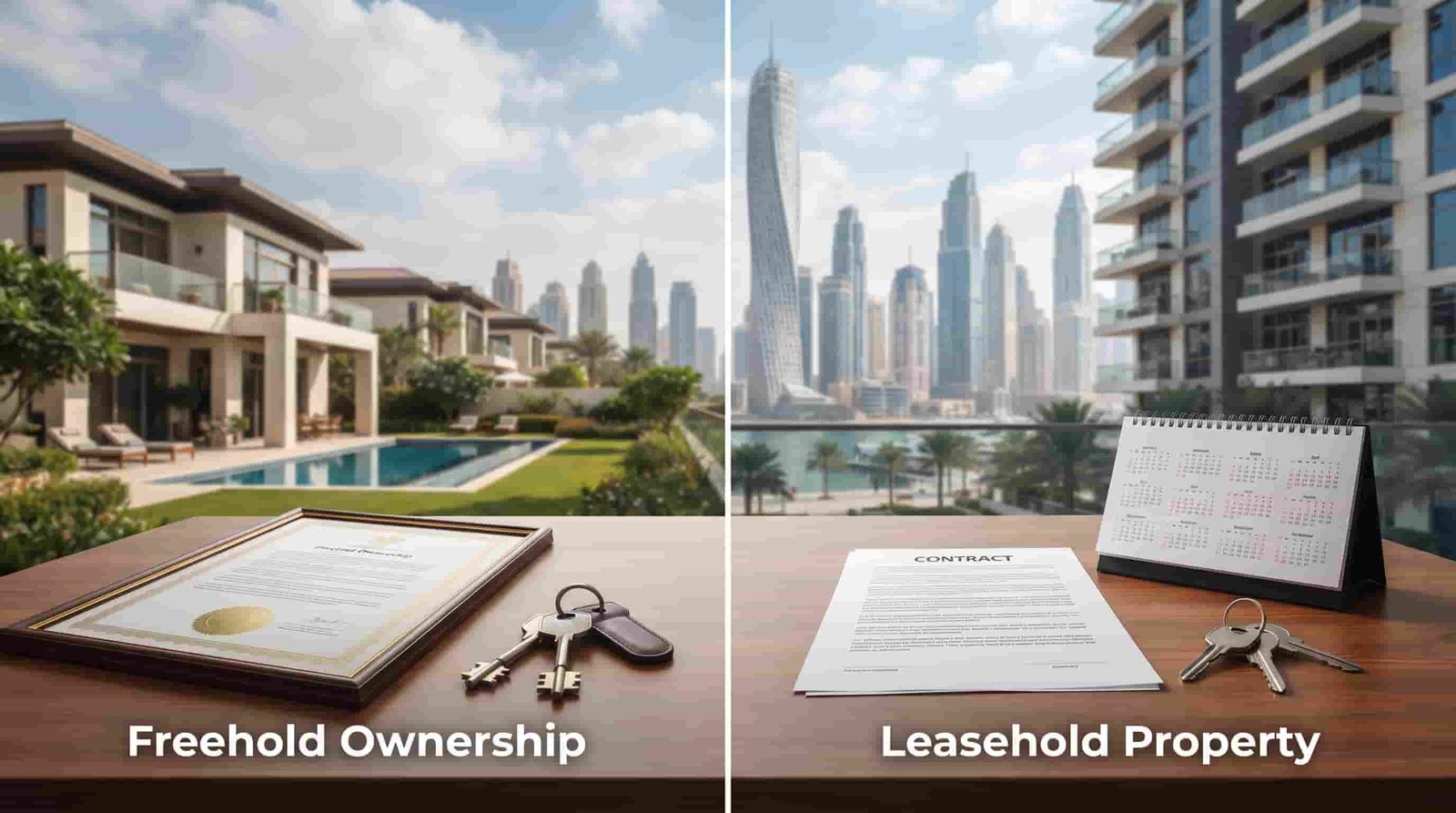
Why the 99-Year Rule Causes Confusion
Some buyers hear that foreigners can own Dubai property for 99 years. That statement is incomplete. The 99-year period applies to usufruct or leasehold rights under the cited law. It does not describe the duration of qualifying freehold ownership.
So, when asking Can you own property in Dubai forever, the first question should be about the registered ownership type.
Can Foreigners Buy Freehold Property?
Yes, eligible foreign buyers can purchase qualifying freehold property in designated areas.
This is why Dubai property ownership foreigner searches often lead to discussions about freehold areas. DLD's current Property Status Enquiry states that freehold purchases are allowed for all nationalities, while non-freehold purchases are limited to GCC nationalities under its stated classification.
Dubai's ownership rules therefore depend on the property's legal classification.
Buyers should never assume that every Dubai property has the same ownership status. Confirm the specific property before signing a purchase agreement. For Australians comparing current Dubai property projects, the site's verified Dubai Properties Projects 2026 guide can provide additional project-level context.
Check the Property Area
Dubai's Regulation No. 3 of 2006 identifies areas where non-UAE nationals may acquire qualifying property rights. It includes freehold ownership without time restriction for listed areas.
However, a 2026 buyer should still verify the specific property's current status through DLD. The practical question is not simply whether an area is popular with foreign buyers. It is whether the particular property is registered under a qualifying ownership structure.
How to Verify Property Ownership
Knowing can you own property in Dubai forever is only useful if you can confirm the ownership right attached to the property. DLD provides official tools for checking property information and verifying title documents.
Its Property Status Enquiry service lets users search property information using details such as the area and land number. DLD also provides a title verification service through its website and Dubai REST App. The service allows customers to verify the validity of a Certificate of Title or title deed.
Verification Checklist
Use Dubai property verification as a practical step before committing funds.
-
Confirm the property's ownership classification.
-
Check the title deed details with DLD.
-
Confirm the registered owner and property information.
-
Review the sale agreement and ownership terms.
-
Check whether any restrictions or property blocks appear in the official record.
|
What to Check |
Where to Check |
Why It Matters |
|
Property status |
DLD Property Status Enquiry |
Confirms the property's classification |
|
Title deed |
DLD Title Deed Verification |
Confirms title validity |
|
Ownership details |
DLD records |
Helps confirm registered information |
|
Contract terms |
Sale agreement |
Identifies the rights being purchased |
|
Restrictions |
DLD property information |
May reveal blocks or registered issues |
What Happens After the Owner Dies?
Freehold ownership does not simply disappear when the registered owner dies. Property interests can pass to heirs through the applicable inheritance process. DLD provides an Inheritance Title Transfer service for registering property ownership in the names of heirs.
This process requires legal inheritance documentation and identification documents. DLD also lists additional requirements for certain mortgaged or preliminary-sale properties.
Property Inheritance Process
Dubai property inheritance involves formal registration rather than an automatic informal transfer. The exact process depends on the circumstances of the estate and the applicable legal documents.
DLD's service allows property ownership to be transferred from the deceased to heirs based on the legal inheritance certificate and required identification documents. This supports the broader answer to can you own property in Dubai forever. The ownership can continue through successive ownership transfers, subject to applicable law and registration requirements.
Buyers should still obtain appropriate estate-planning and legal advice when purchasing significant overseas assets. Buyers planning a wider relocation can also review the How to Move to Dubai From Australia guide.
Does Ownership Give You Residency?
Property ownership and residency are separate legal matters. Owning qualifying property does not automatically give a foreign buyer permanent residency in the UAE. Residency depends on the visa or residence route for which the applicant qualifies.
The UAE's current ICP guidance includes real estate investors within the Golden Residency programme. It states that qualifying real estate investors can receive 10-year residency under the current federal programme.
ICP currently states that real estate investors must own one or more UAE properties with a total value of at least AED 2 million, with full ownership registered in the investor's name. It also lists conditions for qualifying off-plan purchases.
Golden Residency and Property
For buyers researching Dubai Golden Visa property, the AED 2 million threshold is important.
However, meeting the property-value requirement alone does not guarantee approval. Applicants must satisfy the applicable documentation, insurance, ownership, and authority requirements.
The residency programme can also change independently from property ownership rules. Therefore, buyers should verify the current requirements with ICP or the relevant Dubai authority before relying on residency eligibility.
What Australians Should Check
Australian buyers face another layer of due diligence because the property sits outside Australia. The ownership question is only one part of the buying decision.
Before buying, compare the legal ownership structure, purchase costs, ongoing expenses, tax position, currency exposure, and future plans.
Australian Buyer Checklist
-
Confirm the property's freehold or other registered ownership structure.
-
Verify the title through the Dubai Land Department.
-
Review the full purchase agreement before signing.
-
Calculate the total acquisition and ongoing costs.
-
Consider Australian tax obligations for overseas property.
-
Review currency exposure between AUD and AED.
-
Research the developer when buying off-plan.
-
Consider how the property could be transferred or sold later.
For additional location research, Australian buyers can read the verified Best Areas in Dubai to Buy Property. These resources provide supporting information, but they do not replace property-specific legal, tax, or financial advice.
What "Forever" Really Means
The word "forever" needs careful interpretation.
It does not mean an owner is protected from every future legal process or financial obligation. Property can still be sold, transferred, inherited, mortgaged, or affected by applicable legal proceedings.
It also does not mean every Dubai property has permanent ownership rights.
The accurate answer is narrower: can you own property in Dubai forever when you hold qualifying freehold ownership? Yes, Dubai law describes that freehold right as having no time restriction.
The key is the registered legal right attached to the specific property.
|
Buyer Question |
What to Confirm |
|
Is the property freehold? |
Check the official DLD property status |
|
Is foreign ownership allowed? |
Confirm the property's ownership classification |
|
Is the right time-limited? |
Review the registered ownership type |
|
Can heirs receive it? |
Check the applicable inheritance process |
|
Does it support residency? |
Check current ICP requirements |
|
Can I verify the title? |
Use DLD's title verification service |
Take the Next Step
If you are still asking Can you own property in Dubai forever, start with the ownership classification rather than the property's marketing description. Confirm whether the property carries qualifying freehold ownership. Then verify the property status and title with the Dubai Land Department.
You can also explore current Dubai property opportunities through International Property Expo, which connects you with Dubai developers and property opportunities.
Frequently Asked Questions
Can you own property in Dubai forever?
Yes. Qualifying freehold ownership can continue without a fixed time restriction under Dubai law. The property must fall within an applicable ownership structure and designated area.
Can Australians own freehold property in Dubai?
Yes. Foreign buyers can purchase qualifying freehold property in designated Dubai areas. DLD's current property-status guidance states that freehold purchases are allowed for all nationalities.
Is Dubai property ownership limited to 99 years?
Not when the property carries qualifying freehold ownership. The 99-year limit applies to usufruct or leasehold rights under Article 4 of Dubai Law No. 7 of 2006.
How can I verify whether a Dubai property is freehold?
Use DLD's Property Status Enquiry to check the property's status. You can also use DLD's Title Deed Verification service to verify the relevant title document.
Can my family inherit my Dubai property?
Property can be transferred to heirs through the applicable legal inheritance process. DLD provides an Inheritance Title Transfer service for registering property ownership in the heirs' names.
Does owning Dubai property give Australians permanent residency?
No. Property ownership does not automatically provide permanent residency. Eligible real estate investors may qualify for Golden Residency under current requirements, which should be verified with the relevant UAE authority.
What should Australians check before buying Dubai property?
Confirm the ownership type, DLD registration, title information, purchase agreement, costs, developer details, tax position, and currency exposure. Professional Australian tax and legal advice can also help with individual circumstances.